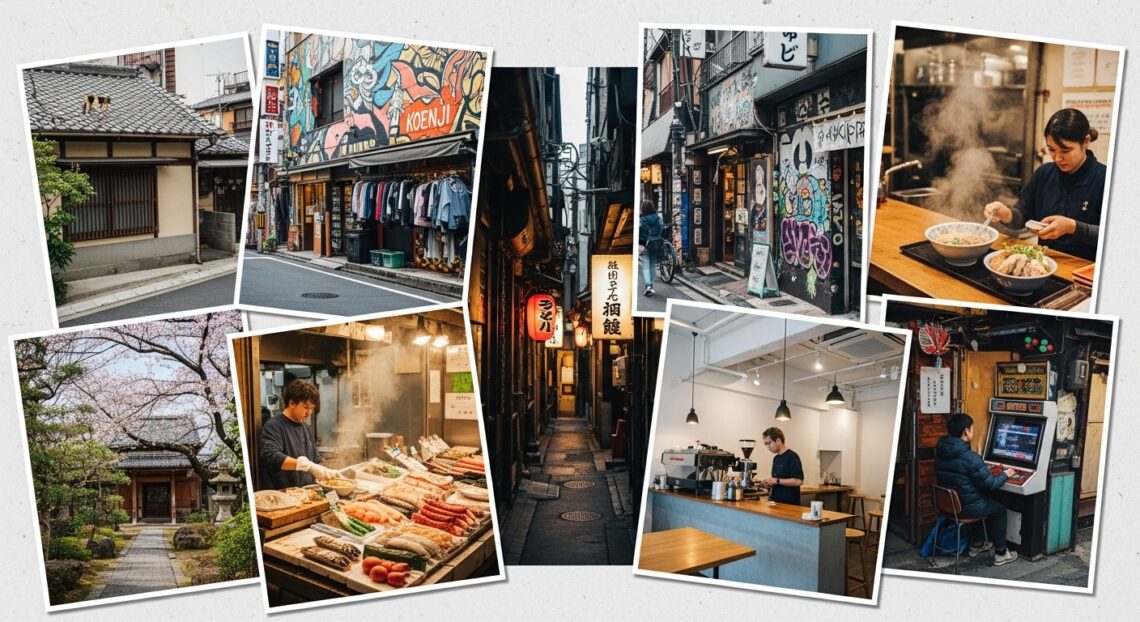
Hello everyone! Today, I’d like to introduce you to some wonderful places in Tokyo that are not famous tourist destinations, but are beloved by locals.
Introduction
When people think of Tokyo, they often think of famous landmarks like Tokyo Skytree, Senso-ji Temple, or the Scramble Crossing in Shibuya. However, Tokyo actually has many more charming places that are off the beaten path. From areas that preserve the traditional downtown atmosphere from the Edo period, to new neighborhoods that developed during post-war reconstruction, and hidden gems that locals frequent – Tokyo’s true charm lies beyond the tourist spots.
I’ve lived here for many years and still visit these hidden gems regularly. These places are like treasure troves for understanding Tokyo’s history and culture deeply.
1. Yanaka Ginza Shopping Street (Taito Ward)
First, let me introduce Yanaka Ginza Shopping Street. This shopping district developed as the center of the Yanaka area, which has continued since the Edo period. During the post-war reconstruction period, it was organized as a shopping street to support local residents’ daily lives, and it still retains the strong atmosphere of the old downtown area.
The greatest charm of Yanaka Ginza is the stone steps called “Yuyake Dandan” (Sunset Steps). These steps lead to a hill behind the shopping street, and in the evening, you can enjoy a panoramic view of Tokyo’s cityscape and beautiful sunsets. Especially before Tokyo Skytree was built, the sunset viewed from this spot was cherished as a spectacular view that captured the sentiment of Tokyo’s downtown area.
The shopping street is lined with traditional candy stores that have continued since the Edo period and small shops selling handmade side dishes. In these shops, you can hear warm conversations between shop owners and regular customers, truly feeling the “heart of downtown.” Particularly, handmade sweets and side dishes using local ingredients that match seasonal events are precious treasures that continue to pass down Tokyo’s traditional food culture.
📍 Yanaka Ginza Shopping Street – Google Map
2. Kiyosumi Shirakawa (Koto Ward)
Next is Kiyosumi Shirakawa. This area has recently gained attention with overseas cafes like Blue Bottle Coffee opening locations, but it’s actually a place with deep history dating back to the Edo period. The name Kiyosumi Shirakawa comes from the “Kiyosumi River” that flowed through this area during the Edo period and the fact that Matsudaira Sadanobu, the lord of Shirakawa Domain, governed this land.
The main attraction of Kiyosumi Shirakawa is Kiyosumi Teien (Kiyosumi Garden). This garden is a strolling garden created by Iwasaki Yataro, the founder of Mitsubishi, during the Meiji period, and it has survived through the Great Kanto Earthquake and wartime damage to remain today. The garden features a beautiful Japanese garden centered around a large pond, with flowers that delight visitors throughout the four seasons. Especially during cherry blossom season in spring and autumn foliage season, you can feel a tranquility and beauty that’s hard to believe you’re in the heart of the city.
Also, this area has Fukagawa Fudo-do, a venerable temple. This temple has been gathering faith from common people since the Edo period and still welcomes many worshippers today. The temple grounds contain buildings that retain traces of the Edo period and stone Buddhas that local people treasure, allowing you to feel the depth of Tokyo’s history and faith.
📍 Kiyosumi Shirakawa – Google Map
3. Kagurazaka (Shinjuku Ward)
Kagurazaka is sometimes called “Little Kyoto” of Tokyo, a very atmospheric street. This area’s history dates back to the Edo period when it developed as a geisha district. The name Kagurazaka comes from the slope called “Kagurazaka” that existed in this area, and even today, stone-paved slopes continue, making you feel like you’re in Kyoto.
The greatest charm of Kagurazaka is its unique atmosphere and the harmonious blend of traditional and modern streetscapes. This area is home to many traditional restaurants that have continued since the Edo period and small Japanese confectionery shops. Especially at night, the lantern lights are very beautiful, allowing you to feel Japan’s traditional beauty. Recently, new cafes and restaurants have also increased, creating a perfect harmony between traditional atmosphere and modern elements.
Walking along Kagurazaka’s stone-paved slopes gives you a feeling as if you’ve traveled back in time. These slopes retain strong traces of the Edo period, allowing you to imagine the lives of people from that era. Also, Kagurazaka has a history of many literary figures and artists visiting, and you can feel its cultural background.
4. Jiyugaoka (Meguro Ward)
Jiyugaoka is known as one of Tokyo’s most popular areas, especially among women. This area’s history began when Jiyugaoka Station opened during the Taisho period, and it later developed as a residential area. The name Jiyugaoka was given with the meaning of “free hill,” and even today, you can feel the free and open atmosphere that matches its name.
The greatest charm of Jiyugaoka is its sophisticated streetscape and diverse shops and cafes. This area has many small accessory shops and unique cafes, making it perfect for spending time leisurely. Especially at “Jiyugaoka La Vita,” you can enjoy delicious sweets and coffee in an Italian terrace-style atmosphere. Such refined spaces are unique to Jiyugaoka’s charm.
Walking through Jiyugaoka gives you a feeling as if you’re in a small European town. The buildings in this area each have individual designs, creating a unified and beautiful streetscape. Also, Jiyugaoka is home to many creators and designers, and you can feel its cultural background.
5. Shibamata (Katsushika Ward)
Finally, let me introduce Shibamata. This area is famous as the hometown of Tora-san from “It’s Tough Being a Man” and still retains a strong atmosphere of the old downtown area. Shibamata’s history is old, having developed as a temple town since the Edo period. The name Shibamata was given from the “shiba” (grass) plants that grew in this area and the meaning of “mata” (again).
The greatest charm of Shibamata is its nostalgic downtown atmosphere and traditional culture. There’s Shibamata Taishakuten, a venerable temple, and traditional shops line the approach. There’s a famous specialty called “Kusadango” (grass dumplings), which I sometimes go to buy. This Kusadango is made using traditional methods that have continued since the Edo period, and its taste truly expresses the heart of downtown.
Walking through Shibamata gives you a feeling as if you’ve time-traveled to the Showa era. The buildings and shops in this area maintain their old-fashioned appearance, allowing you to imagine the lives of people from that time. Also, Shibamata has a history of many movie fans visiting, and you can feel its cultural background.
Conclusion
How did you find it? Tokyo has many wonderful places like these beyond famous tourist destinations. They’re all places that locals frequent, where you can see the real face of Tokyo.
Each place has its own unique charm and history. By visiting these hidden gems, you can experience Tokyo’s true culture and feel the warmth of local life.
I hope overseas visitors will also visit these places and feel Tokyo’s hidden charm. I’m sure you’ll discover a new side of Tokyo.
See you next time!